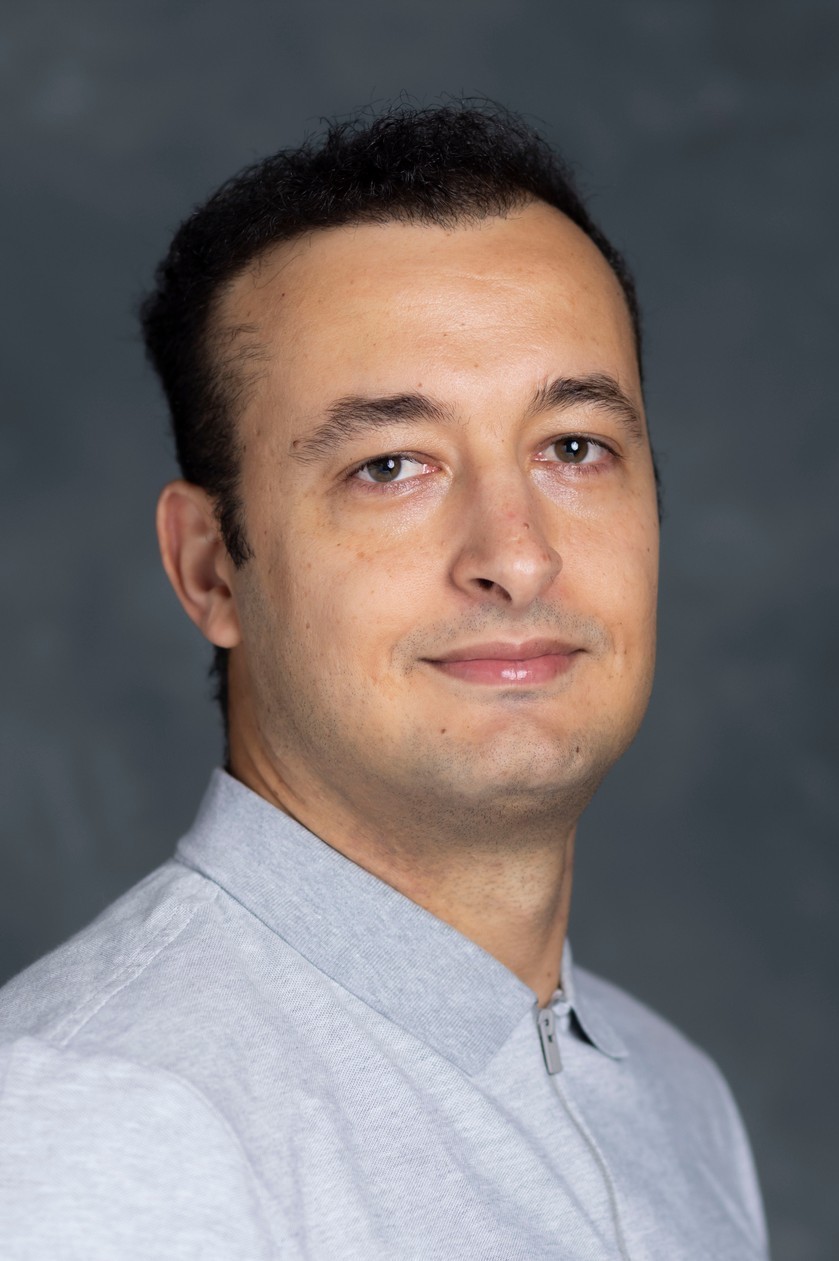
Mohamed Akrout
Department of Electrical Engineering and Computer Science
College of Engineering, University of Tennessee
About me
Academia
I am an Assistant Professor in the Department of Electrical Engineering and Computer Science at the University of Tennessee. I received my PhD in Electrical and Computer Engineering in 2024 from the University of Manitoba. I received my BE in Computer Engineering from Ecole Polytechnique de Montreal and Telecom ParisTech, and my MS in Applied Computing from the University of Toronto. After my PhD, I spent a year visiting the Technical University of Munich and the University of California San Diego. I was awarded the doctoral scholarship and the postdoctoral fellowship from the Natural Sciences and Engineering Research Council of Canada (NSERC), in 2022 and 2024, respectively.
Industry
Before joining academia, I worked on using AI to streamline the patient–clinician cycle, building AI agents that deliver accurate second-opinion diagnoses to doctors so they can focus their limited time on treatment and prescription. In this context, I helped co-found AIP Labs, a European digital health and AI company focused on dermatology, which I still advise from time to time. Through the AIP digital clinic, patients receive a dermatology diagnosis, a treatment plan, and a prescription within a few hours, all reviewed by an EU-certified dermatologist.
Research interests
My research sits at the interface of physics, information, and learning. I am particularly interested in how physical and system-level constraints shape what future sensing and communication systems can achieve, and how principled signal processing and AI can operate within those limits. My work is organized around three directions:
Wireless Sensing
I design high-resolution wireless sensing systems for precision health and continuous monitoring of patients and animals, including horses. Using mmWave and sub-THz radar, I reconstruct granular physiological biomarkers (e.g., respiratory waveforms) and track subjects without invasive or contact-based wearables. I combine classical radar signal processing with deep learning techniques by employing neural networks as targeted function approximators to enhance estimation accuracy.
- Radar for medical applications
- Horse monitoring
- Tracking
- mmWave & sub-THz radar
Circuit and Antenna Theories for Communication and Sensing
The achievable rate of a communication system is defined by information theory, yet the constraints that limit it, such as antenna size, mutual coupling, and bandwidth, come from electromagnetics and circuit theory. I combine Shannon's and Maxwell's theories through circuit-based, physically consistent models to understand and design MIMO, near-field, and wideband systems beyond 5G.
- Physically consistent models
- Wideband Massive MIMO
- Mutual coupling
- Near-field communication
Signal Processing and AI for Data-Scarce Regimes
I develop estimation methods that compensate for scarce data by exploiting structure and prior knowledge. Specifically, I design scalable Bayesian inference algorithms to leverage signal priors for high-dimensional estimation. This includes unlabeled sensing, Kalman filtering beyond Gaussian process noise, and distributed inference. I bring these same principled tools from estimation theory, dynamical systems, and information theory to large language models. I diagnose and mitigate hallucinations, safety vulnerabilities, and deceptive behaviors when behavioral data is limited, with direct applications to forensic tasks. I also optimize the deployment of AI-aided signal processing for IoT sensing, where labeled data is often scarce.
- Small-data inference
- Non-Gaussian filtering
- Trustworthy LLMs
- AI-aided IoT sensing
For prospective students
Unfortunately, I am currently not recruiting for open positions anymore for this admission cycle. Good luck with your search! If you are still interested, you can apply to our department here.